I’m So Glad I’m Not An Alpha Male!

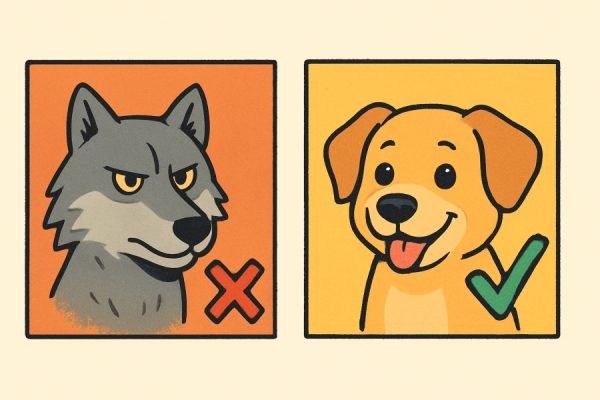
wolf and dog imageI’m really glad I’m not an alpha male.

As an alpha male you have a terrible time. You’re always stressed, always under pressure, always fighting to maintain your position in the hierarchy. Somebody’s always trying to steal your alpha female . You have to be butch and dominant all the time and keep people in their place; it’s really tiring. And you have to keep looking over your shoulder because somebody’s always about to stab you in the back or bite you in the bum or worse. It’s just not worth it.

I don’t even want to be a beta male; I’m happy as a regular member of the pack. I don’t get first pickings of life’s carcases (that’s a metaphor) but I get enough scraps to stay alive. It suits me to not be important enough to be worth challenging. I don’t have much of an inner wolf anyway, probably more of a miniature golden retriever.

Being a zeta male – that’s where I’m comfortable. Everyone has low expectations so nobody’s disappointed; what’s not to like about that?

So what about you? What’s your preferred position: alpha, beta, zeta… or status-non-binary?

‘Always’….are you sure?


graphic of the word Always


Are we over-using words like this? Are you an always-er? Do you say things like…

“You ALWAYS say that”

“This ALWAYS happens to me!”

“It ALWAYS rains when we want to go out!”

“Why does he ALWAYS leave the toilet seat up!”

Alternatively, maybe you get annoyed when others do. Because this is  exaggeration obviously: hyperbole. The problem is that it conveniently conveys inevitability; it’s a tool of serial complaining; it justifies one’s miserableness. Is that a good thing?

What are your favourite ‘always’ statements?

What are your most annoying other people’s ‘always’s?

I’d love to know.


Optimism and pessimism: #1

Three Characteristics of Pessimistic Thinking

Dr. Martin Seligman, former president of the American Psychological Association, identifies three characteristics of pessimistic thinking:    

The first is permanence. In other words, regarding temporary, passing events as being lasting and unchanging states. For example, your boss chews you out about something. You react by thinking, “I really hate him,” and you go on from there to think of all the things you don’t like about your boss. Your boss’s reprimand is a single, passing event, but you turn it into something permanent by thinking, “He’s always like that,” and “No matter what I do, he’ll never change.” On the other hand, the optimistic person thinks, “The boss is in a bad mood today. Something must have happened,” limiting the event to that day and not extending it any further.     Continue reading “Optimism and pessimism: #1”

Our wildlife garden

How to Create an Amazing Urban Wildlife Garden
– what we’ve learned in 15 years

Gerry Thompson

In 2002 we moved our family home from Brighton UK to a nearby town. The reason? – we didn’t have a garden. Our new home had two gardens, neither very large. The rear would be the domain of our lively cocker spaniel Rosa, and the front space would be for …wildlife!

Now, 16 years later, that front patch is a wildlife paradise – a veritable jungle among many houses with more sterile gardens or hard-standings for their cars. So what better than having wild nature right where you live? Continue reading “Our wildlife garden”

learning from comedians: dealing with fear

dealing with fear, part 1

“A lot of people are afraid of heights. Not me; I’m afraid of widths” –  stand-up comedian Stephen Wright

Perhaps the single most commonly admired attribute of stand-up comedians is their  demonstration of courage and management of fear – preparedness to stand alone in front of an unknown, potentially hostile, and sometimes huge audience – risking failure: not amusing them, not being liked, being heckled or boo-ed off. This is a visceral and quite fundamental fear, which feels like it’s about one’s very survival. Not for nothing is a bad comedy experience on stage termed ‘dying on your *ss’. Continue reading “learning from comedians: dealing with fear”

Learning from comedians: creative comedy thinking

gerry stand-up small
“I once had a leather jacket that got ruined in the rain. Why does moisture ruin leather? Aren’t cows outside a lot of the time? When it’s raining, do cows go up to the farmhouse, calling out ‘Let us in! We’re all wearing leather! Open the door! We’re going to ruin the whole outfit here!'”– Jerry Seinfeld


One of the chief reasons we appreciate comedians – and one of the major reasons that they can exert influence on us, is that they continually make us think about things in ways we have never thought about them before: everyday things, trivial things, important things, life-and-death things, all kinds of things. Continue reading “Learning from comedians: creative comedy thinking”

review: ‘Astral Sex to Zen Teabags’

“Once in a lifetime comes a book that will totally transform your life, help you find your true direction, and reveal to you the very mysteries of existence itself… This is not that book. However, it is the funnietst, most brilliant tongue-in-cheek guide to New Age jargon yet published”

– Om Yoga magazine

Living in the present #4

Sabotaging the present:

We’re often prone to squandering the present moment. Do you ever find yourself doing one thing (washing the dishes, Pilates practice, making love), but thinking ahead to the next or later activity (wondering what to cook for dinner, next week’s Pilates practice making love with someone else), perhaps wanting it to stop, or wanting a process to end, being impatient to get on to something else yet carrying on with the present thing? Continue reading “Living in the present #4”